
by Prateek Chopra | June 2, 2026 | Cardiology Conferences | ESC-HF 2026
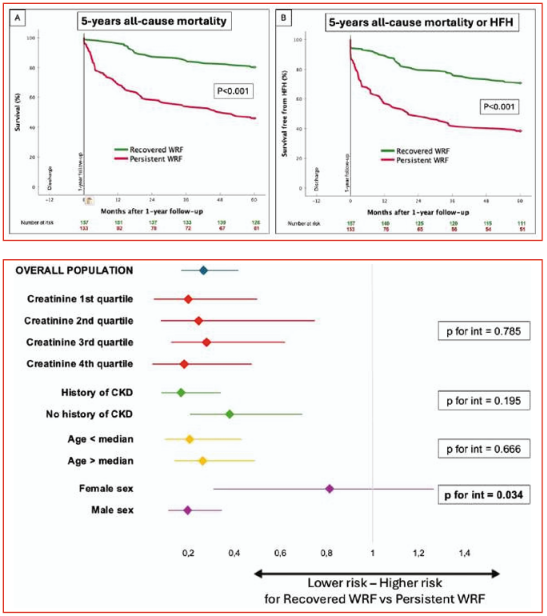
Worsening renal function (WRF) frequently occurs during hospitalization for acute decompensated heart failure (ADHF), although its prognostic significance remains controversial because transient creatinine increases may reflect effective decongestion or initiation of guideline-directed medical therapy rather than irreversible renal injury. This study evaluated the rate of WRF recovery after discharge, predictors of persistent WRF, and its long-term prognostic implications in patients hospitalized for ADHF. The findings were presented at Heart Failure 2026, organized by the European Society of Cardiology, held in Barcelona, Spain, from 9–12 May 2026.
In a cohort of patients hospitalized for ADHF, creatinine levels were measured at admission, daily during hospitalization, and at 12 months after discharge. WRF was defined as a creatinine increase ≥0.3 mg/dL, and only patients who developed WRF during index hospitalization were included. At 12 months, WRF was categorized as recovered when creatinine differed by <0.3 mg/dL compared with admission values, or persistent when the difference remained ≥0.3 mg/dL. Predictors of persistent WRF were evaluated using multivariable logistic regression, while multivariable Cox regression analyses assessed clinical outcomes. The primary endpoint was 5-year all-cause mortality following the 12-month creatinine reassessment.
Among 2,020 patients hospitalized for ADHF, 331 patients (16%) developed WRF. Of these, 38 patients died before the 12-month reassessment and 3 were lost to follow-up, leaving 290 patients for analysis. At 12 months, 157 patients (54%) demonstrated recovered WRF, while 133 patients (46%) had persistent WRF. Older age (OR=1.037 per 1 year increase; p=0.016), elevated neutrophil peptide levels (OR=1.822; p=0.043), and right ventricular dysfunction during hospitalization (OR=1.861; p=0.044) independently predicted persistent WRF. At 5-year follow-up after the 12-month assessment, recovered WRF, compared with persistent WRF, was strongly associated with lower risk of mortality (adjusted HR=0.229; p<0.001) and lower risk of mortality or rehospitalization for ADHF (HR=0.295; p<0.001). The survival benefit associated with WRF recovery was independent of prior chronic kidney disease, baseline creatinine, and age, while the association appeared stronger in male patients (p-int=0.034).
These findings demonstrated that WRF during hospitalization for ADHF is common but reversible in more than half of patients within the first year after discharge. Recovery of renal function was associated with substantial reductions in mortality and morbidity, underscoring the importance of longitudinal renal function assessment following in-hospital WRF. Further studies evaluating different domains of renal injury may help clarify distinct WRF phenotypes and their prognostic implications.