
by Prateek Chopra | May 23, 2026 | Cardiology Conferences | ESC-HF 2026
Cardiac resynchronization therapy (CRT) is recommended for symptomatic heart failure (HF) patients with prolonged QRS duration and reduced left ventricular ejection fraction (LVEF), although pivotal CRT trials predated widespread use of angiotensin receptor-neprilysin inhibitors (ARNI) and sodium-glucose co-transporter-2 inhibitors (SGLT2i). This study evaluated whether contemporary HF therapy influences echocardiographic response and clinical outcomes following CRT. The findings were presented at Heart Failure 2026, organized by the European Society of Cardiology, held in Barcelona, Spain, from 9–12 May 2026.
This single-center retrospective study included consecutive patients undergoing CRT between January 2017 and April 2024. Patients were classified according to baseline treatment with ARNI and/or SGLT2i versus neither therapy. Echocardiographic assessment was performed at baseline and 6–12 months post-CRT. CRT response was defined as ≥15% reduction in left ventricular end-systolic volume or absolute increase in LVEF ≥10%. The primary endpoint was major adverse cardiac events (MACE), including all-cause mortality or HF hospitalization.
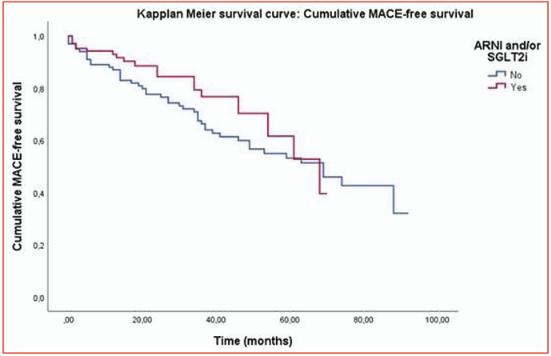
A total of 206 patients were included (median age 74 years; 68.4% male; 67.5% non-ischemic HF), with 105 patients (51%) receiving ARNI/SGLT2i therapy. Baseline characteristics were comparable, although beta-blockers and mineralocorticoid receptor antagonists were more frequently prescribed in the ARNI/SGLT2i group. CRT response rates were similar between groups (81.1% vs 82.9%; p=0.782), as was NYHA class improvement (64.9% vs 70.9%; p=0.388). However, patients receiving ARNI/SGLT2i had significantly lower rates of MACE (18.3% vs 46%; p<0.001), all-cause mortality (14.4% vs 35%; p<0.001), HF hospitalization (12.5% vs 26.0%; p=0.014), and IV diuretic requirement (16.3% vs 33.0%; p=0.006). Kaplan–Meier analysis demonstrated a non-significant trend toward improved event-free survival.
CRT remained associated with high rates of echocardiographic and functional response, and contemporary HF therapy with ARNI and/or SGLT2i was associated with a trend toward improved event-free survival, suggesting that the clinical benefit of CRT is maintained in the era of modern guideline-directed therapy.