
by Prateek Chopra | May 19, 2026 | Cardiology Conferences | ESC-HF 2026
N-terminal pro–B-type natriuretic peptide (NT-proBNP) is an established biomarker for risk stratification in Heart Failure with reduced ejection fraction (HFrEF). However, the prognostic significance of serial variability in NT-proBNP levels during routine follow-up in clinically stable patients remains unclear. This study aimed to determine whether fluctuations in NT-proBNP measurements provide additional prognostic value for adverse outcomes in stable HFrEF outpatients. The findings were presented at Heart Failure 2026, organized by the European Society of Cardiology, held in Barcelona, Spain, from 9–12 May 2026.
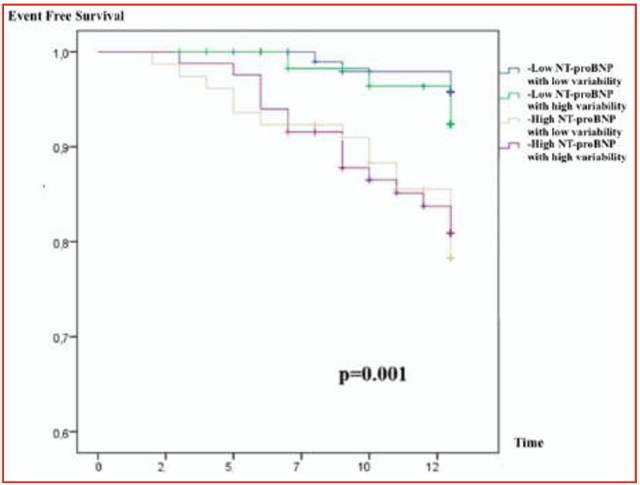
This single-center retrospective observational study included 323 clinically stable HFrEF patients with left ventricular ejection fraction ≤40%, at least one year of stability, and a minimum of four NT-proBNP measurements obtained at intervals of at least one month. NT-proBNP variability was assessed using the coefficient of variation (CV), and patients were categorized into high- and low-variability groups according to the cohort median. The primary composite endpoint included all-cause mortality, heart transplantation or mechanical circulatory support, and HF-related hospitalization. Patients were additionally stratified according to median NT-proBNP level (1062 pg/mL) and grouped based on both NT-proBNP level and variability.
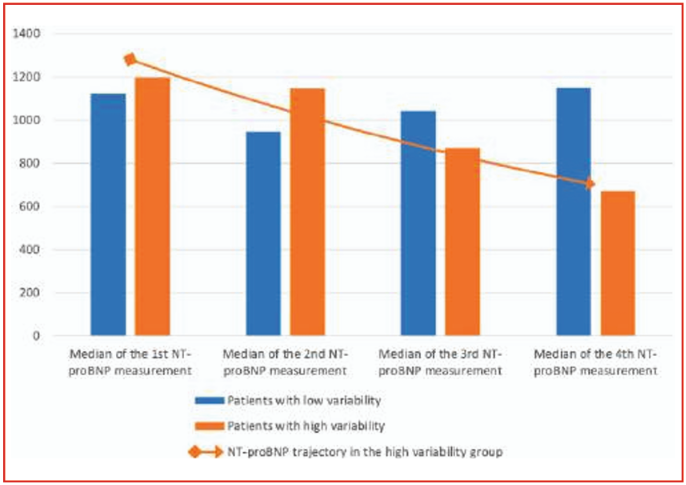
No significant difference in the incidence of the composite endpoint was observed between high- and low-variability groups (p=0.84). However, patients with higher mean NT-proBNP levels (≥1062 pg/mL) experienced significantly worse outcomes compared with those with lower levels (p=0.001). Variability did not significantly influence prognosis within either NT-proBNP stratum. Subgroup analyses similarly demonstrated that elevated NT-proBNP levels consistently predicted adverse outcomes, whereas NT-proBNP variability alone was not prognostic. In the high-variability subgroup, baseline NT-proBNP concentrations were higher but showed a progressive decline over sequential measurements, suggesting that variability may partly reflect treatment response rather than clinical deterioration.
Serial variability in NT-proBNP levels during a stable follow-up period was not independently associated with adverse outcomes in HFrEF patients. In contrast, persistently elevated NT-proBNP levels remained a strong predictor of poor prognosis, emphasizing that the overall trajectory and sustained elevation of natriuretic peptide levels may be more clinically relevant than variability alone.