
by Prateek Chopra | May 18, 2026 | Cardiology Conferences | ESC-HF 2026
Heart Failure with preserved ejection fraction (HFpEF) is a clinically heterogeneous syndrome with substantial variability in patient characteristics, prognosis, and therapeutic response. Despite advances in HF management, treatment outcomes in HFpEF remain inconsistent, likely reflecting differences in underlying pathophysiological mechanisms across patient subgroups. Machine learning–based phenotyping has emerged as a promising strategy to better characterize HFpEF heterogeneity and identify patient populations that may derive greater benefit from targeted therapies. This study aimed to derive distinct HFpEF phenogroups using machine learning techniques and evaluate their prognostic implications and differential response to Sacubitril/Valsartan therapy. The findings were presented at Heart Failure 2026, organized by the European Society of Cardiology, held in Barcelona, Spain, from 9–12 May 2026.
Using data from 4,796 patients enrolled in the PARAGON-HF trial, investigators identified distinct clinical phenogroups through a hierarchical agglomerative clustering algorithm based on 33 baseline characteristics. The primary outcome was a composite of total HF hospitalizations and cardiovascular death. Clinical outcomes and treatment response to Sacubitril/Valsartan versus Valsartan were assessed across phenogroups.
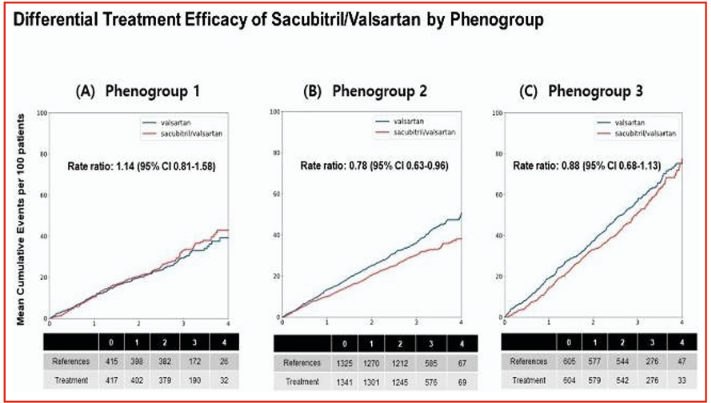
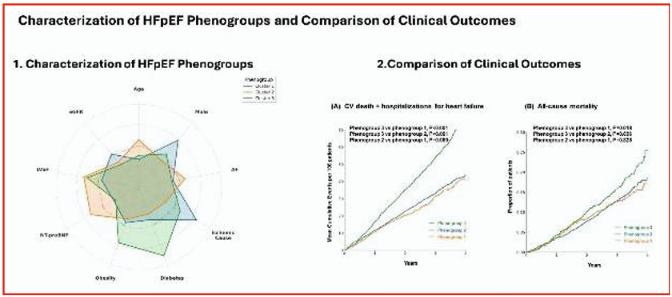
Three distinct HFpEF phenogroups were identified. Phenogroup 1 (n=832) included younger patients, predominantly men, with a higher prevalence of ischemic etiology and lower LVEF. Phenogroup 2 (n=2,666) comprised older patients, predominantly women, with a higher prevalence of Atrial Fibrillation and elevated NT-proBNP levels. Phenogroup 3 (n=1,209) was characterized by higher rates of Obesity and Diabetes, along with lower NT-proBNP levels. Compared with phenogroups 1 and 2, phenogroup 3 demonstrated the highest risk of the primary composite endpoint and all-cause mortality (all P<0.05). Sacubitril/Valsartan treatment was associated with a greater reduction in the primary endpoint in phenogroup 2, with a rate ratio of 0.78 (95% CI: 0.63–0.96; p for interaction=0.052).
Three distinct HFpEF phenogroups with differing clinical profiles, prognoses, and treatment responses to Sacubitril/Valsartan were identified. These findings support the presence of phenotype-specific pathophysiological mechanisms in HFpEF and highlight the potential for personalized therapeutic strategies using machine learning–based phenotyping approaches.