
by Prateek Chopra | June 15, 2026 | Cardiology Conferences | ESH 2026
Unmet Cardiometabolic Need:
Address the broader cardiometabolic burden in type 2 diabetes (T2DM), where ~75% of patients have concomitant hypertension and a 2–4× elevated cardiovascular (CV) risk. Treatment goals extend beyond glycemic control to include cardiovascular and renal protection, facilitated by digital health technologies and novel pharmacotherapies.
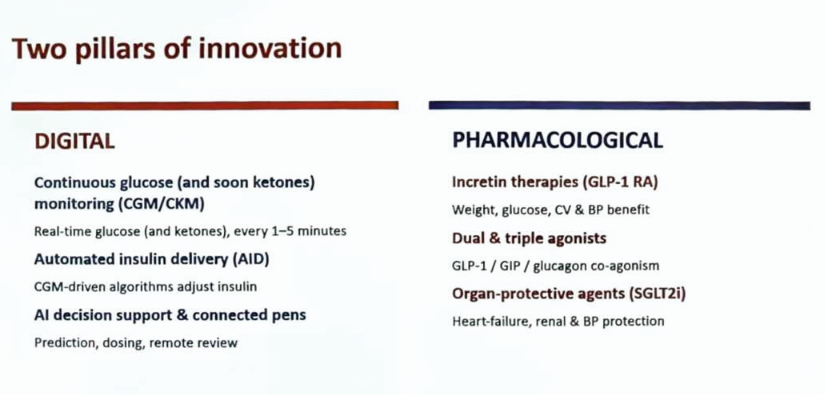
Digital Health Innovations:
- Continuous Glucose Monitoring (CGM): Provides real-time glucose readings every minute with high accuracy.
- Automated Insulin Delivery (AID) Hybrid Systems: Improve time-in-range to 70–80%, reduce hypoglycemia.
- Continuous Ketone Monitoring: Early detection of diabetic ketoacidosis.
- AI-Driven Decision Support: Predicts glycemic excursions and guides therapy.
- Connected Care Platforms & Smart Pens: Enable remote monitoring and equitable access.
Pharmacological Advances:
- GLP-1 Receptor Agonists: Weight loss, BP reduction, CV protection beyond glycemia.
- Dual/Triple Agonists (e.g., Tirzepatide, Retatrutide): Enhanced glucose control, weight reduction; retatrutide lowers HbA1c by ~2.2%.
- SGLT2 Inhibitors: Reduce heart failure hospitalizations, slow CKD progression, and lower BP independently of HbA1c.
- Next-Generation Insulins & Gene Therapies: Simplify therapy and hold potential for long-term disease modification.
Clinical Implications:
- Modern diabetes care is now defined by two converging pillars:
- Digital tools: Continuous, automated glucose control.
- Cardiometabolic drugs: Organ protection independent of glycemia.
- CGM, AID, and AI support the digital revolution, while GLP-1 receptor agonists, dual/triple agonists, SGLT2 inhibitors, and advanced insulins redefine pharmacologic ambition.
- Successful implementation requires equitable access, affordability, and robust data governance.
The convergence of digital health and novel pharmacotherapies is transforming T2DM management, enabling continuous glucose control and independent cardiovascular-renal protection. Optimizing patient outcomes requires integrating technology, advanced pharmacology, and strategies to ensure equitable delivery of care.